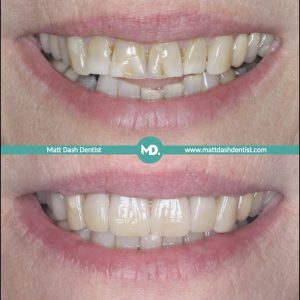
What are white spots on teeth?
White spots on teeth are areas where the enamel looks lighter than the surrounding tooth. They are often noticed after orthodontic treatment, but they can appear for other reasons too.
These marks are usually caused by changes in the mineral content of enamel. In some cases, the surface of the tooth is still intact, which means drilling may not be needed.


Why do white spots develop?
White spots can develop for a number of reasons, including:
- Changes in enamel during tooth development
- Early enamel demineralisation
- Reduced mineral levels around braces
- Acid exposure over time
Not all white spots behave in the same way. Some remain stable, while others may become more noticeable as the teeth dry or whiten.
Can white spots on teeth be treated without drilling?
In certain cases, yes. If the enamel surface is intact, non invasive treatment may be an option. One approach is resin infiltration, often known by the product name ICON.
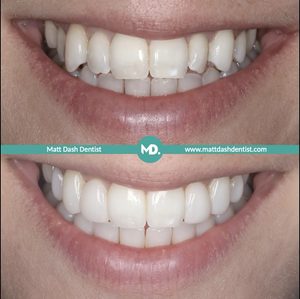
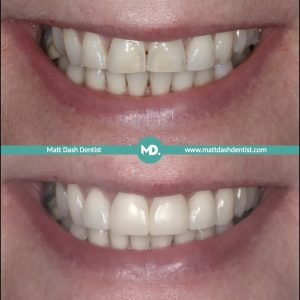
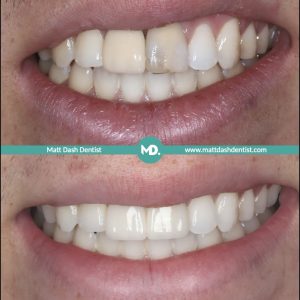
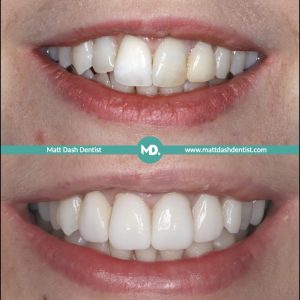
This treatment works by allowing a clear resin to penetrate the porous enamel. The aim is to reduce the contrast between the white spot and the surrounding tooth, rather than removing tooth structure.
It does not suit every case, and results can vary. A proper assessment is needed to decide whether this approach may help.
When drilling may still be needed
If the enamel is damaged or there is decay, drilling may be necessary to protect the tooth. In these situations, options such as composite bonding or porcelain restorations may be more appropriate.
The key is choosing the least invasive option that still supports long term tooth health.
Why careful assessment matters
At Matt Dash Dentist in Edinburgh’s West End, white spots are assessed carefully before any treatment is suggested. Factors such as enamel quality, tooth colour and overall smile balance all matter.
The goal is improvement that looks natural, not over treatment.
Seeing real examples
Before and after photos can be helpful when considering treatment for white spots. They show what may be achievable in similar situations, while recognising that results differ between individuals.

Next steps
If white spots on your teeth concern you, a conversation is often the best place to start.
You can arrange a complimentary e consultation with award winning dentist Matt Dash to discuss whether non drilling treatment may be suitable for you.
Helpful resource
For further information on minimally invasive dentistry, the British Academy of Cosmetic Dentistry provides useful guidance and education.