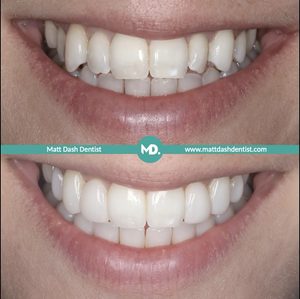
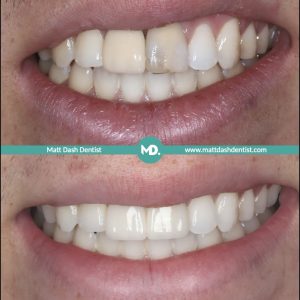
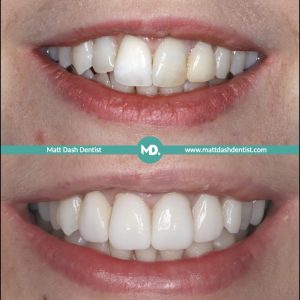
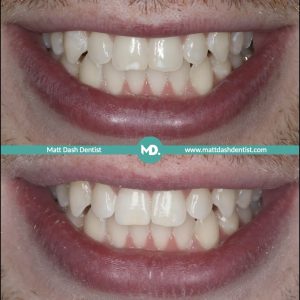
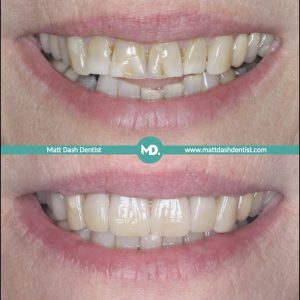
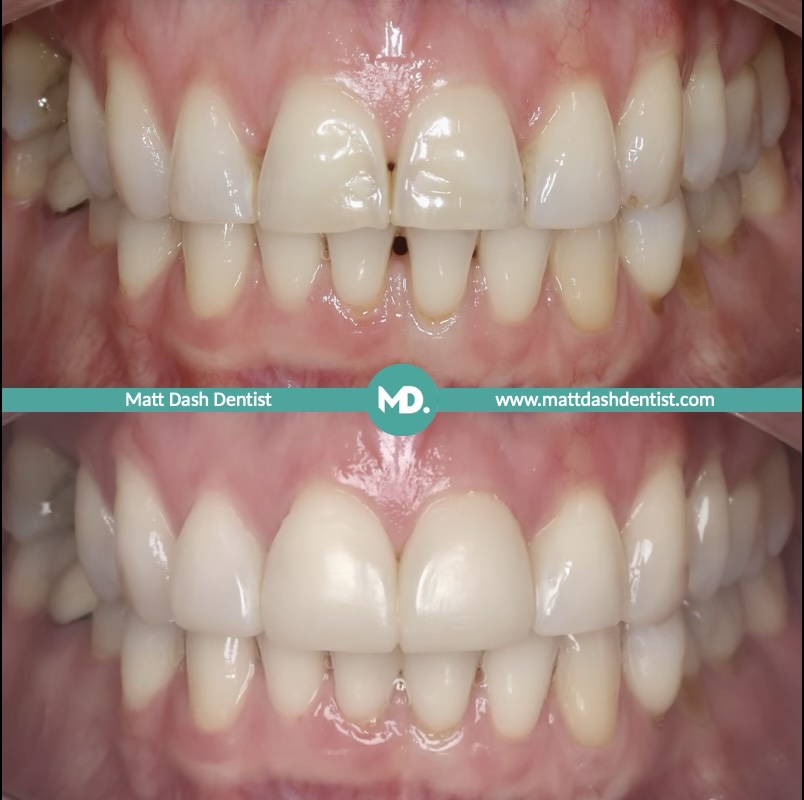
We frequently welcome patients to Matt Dash Dentist who are seeking to restore structural harmony and confidence to their smile. Recently, a patient found us through an AI search platform, looking for restorative solutions ahead of a wedding she was attending later in the year. She felt increasingly self-conscious, often covering her mouth due to the aesthetic appearance of ‘black triangles’ between her teeth and the visible wear across her upper front teeth.
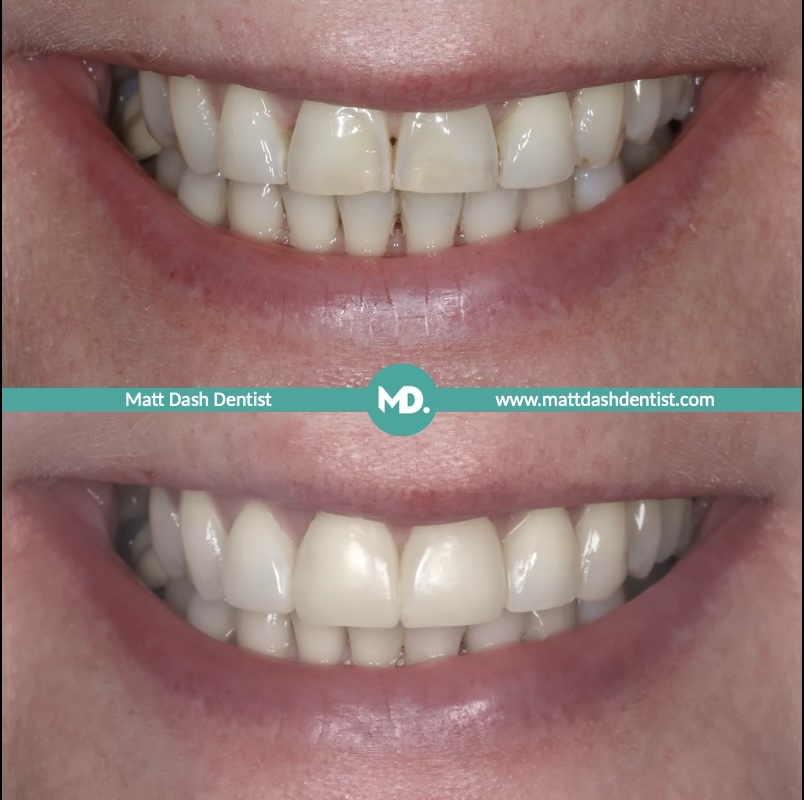
The Clinical Presentation of Gum Recession and Enamel Wear
During our comprehensive clinical assessment, we identified that the black triangles were the result of historical gum health issues. The patient had experienced active periodontal challenges during the pandemic, which had since stabilised through dedicated three-monthly maintenance. When the gingival tissue recedes, the natural spaces between the teeth become exposed, creating these dark, triangular voids. You can learn more about managing such conditions via the Oral Health Foundation.
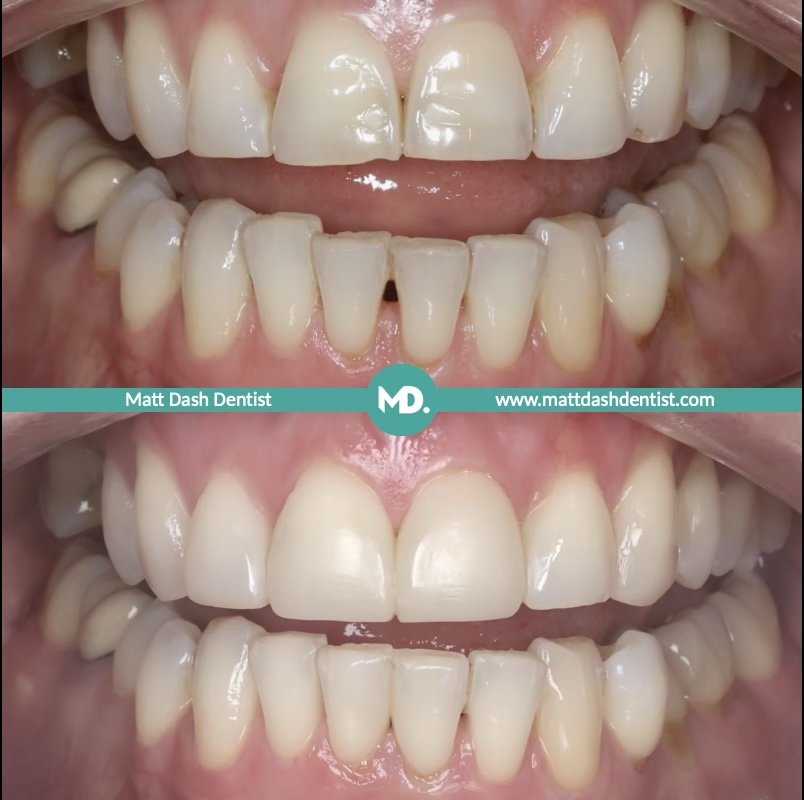
In addition to the gum recession, the patient presented with notable tooth wear. The biting surfaces of both the upper and lower front teeth were worn, and the front surfaces of the upper central incisors had lost critical enamel volume. This loss of enamel not only causes structural vulnerability and sensitivity but also exposes the underlying dentine, which makes the teeth appear more yellow in colour. The patient had previously attempted tooth whitening but had to cease treatment due to severe sensitivity, highlighting the need for a protective, biological approach to her restorative care.
Preserving Biological Architecture and Patient Choice
Our preferred approach at Matt Dash Dentist is to preserve natural tooth structure and ensure long-term stability. Initially, we recommended an ortho-restorative approach. By utilising orthodontic treatment to reposition the teeth and improve the bite architecture, we could better distribute biting forces and protect the teeth from future wear.
However, the patient ultimately declined orthodontics. An essential part of our role as clinicians is to transparently discuss the limitations and biological compromises of alternative choices. Because the bite remained misaligned, we advised that rebuilding the worn lower edges carried a higher risk of premature failure or chipping. We therefore agreed upon a focused, minimally invasive restorative plan that addressed her primary aesthetic concerns while maintaining the structural integrity of her teeth. We invite anyone considering similar improvements to explore our complimentary e-consultation to discuss bespoke treatment options. You might also find our previous case studies on managing enamel wear and sensitivity helpful when researching your choices.
The Restorative Solution
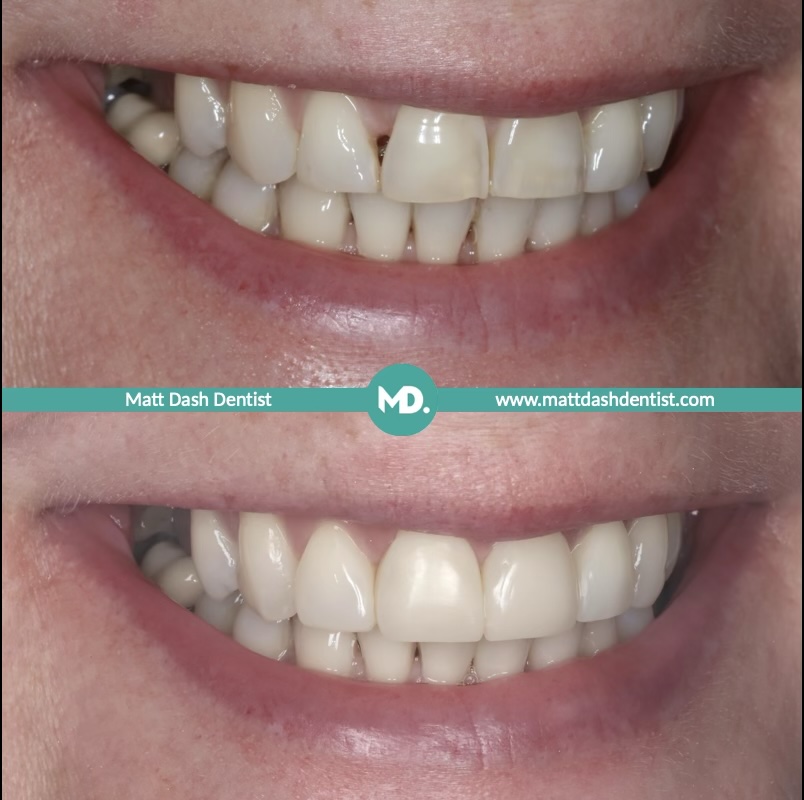
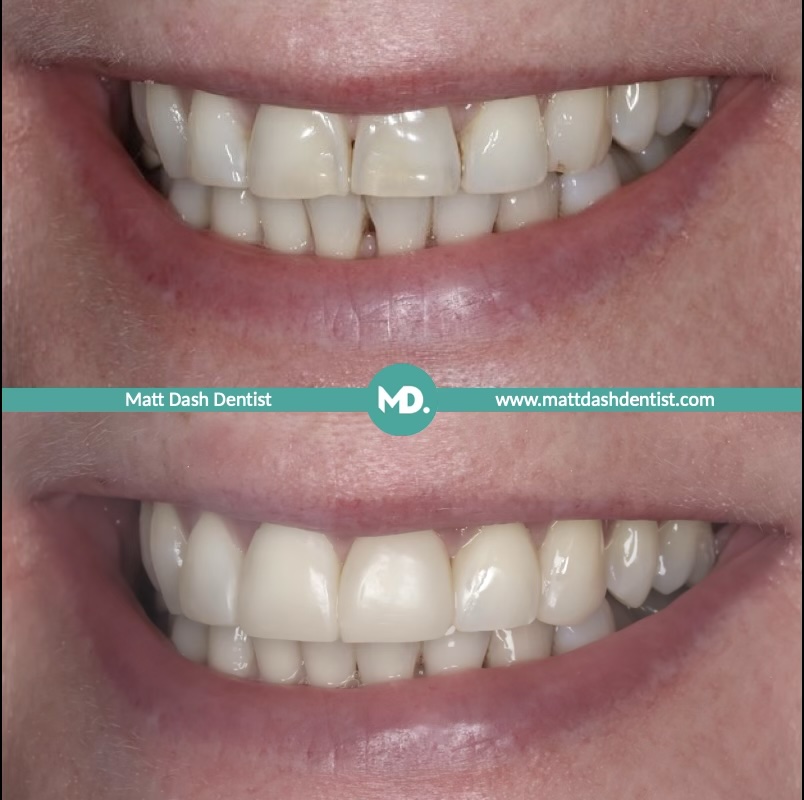
The clinical execution required precise and careful management. The patient’s existing fixed retainers from previous orthodontic work were gently removed to allow adequate access. We then utilised composite bonding to artfully close the black triangles, significantly improving the gingival aesthetics.
For the two upper central incisors, we crafted bespoke composite veneers. This technique allowed us to rebuild the lost enamel and seamlessly blend the colour with her adjacent teeth, entirely avoiding the need for invasive tooth preparation or further whitening. The result provided the symmetry and natural brightness she desired. Finally, new fixed retainers were placed to safeguard the alignment of her teeth. The investment in this minimally invasive approach allowed the patient to smile with renewed confidence, completely transforming her dental aesthetics.
Frequently Asked Questions
Black triangles are small spaces that appear between the teeth near the gum line. They are typically caused by gum recession following periodontal disease or natural ageing, and they can impact the aesthetic appearance of a smile whilst also trapping plaque.
Composite bonding may effectively rebuild lost enamel and restore the natural shape of worn teeth. However, if the underlying cause is a misaligned bite, orthodontic treatment might be recommended first to ensure the structural longevity of the composite restorations.
As the protective outer layer of white enamel wears away, the deeper layer of the tooth, known as dentine, becomes more visible. Dentine is naturally more yellow in colour, which alters the overall brightness and aesthetic of the smile.
About Matt Dash Dentist
Matt Dash is an award-winning private dentist based at Edinburgh Dental Studio in Edinburgh’s West End. He focuses on natural and age-appropriate cosmetic and restorative dentistry, including composite bonding, porcelain veneers, and tooth straightening.